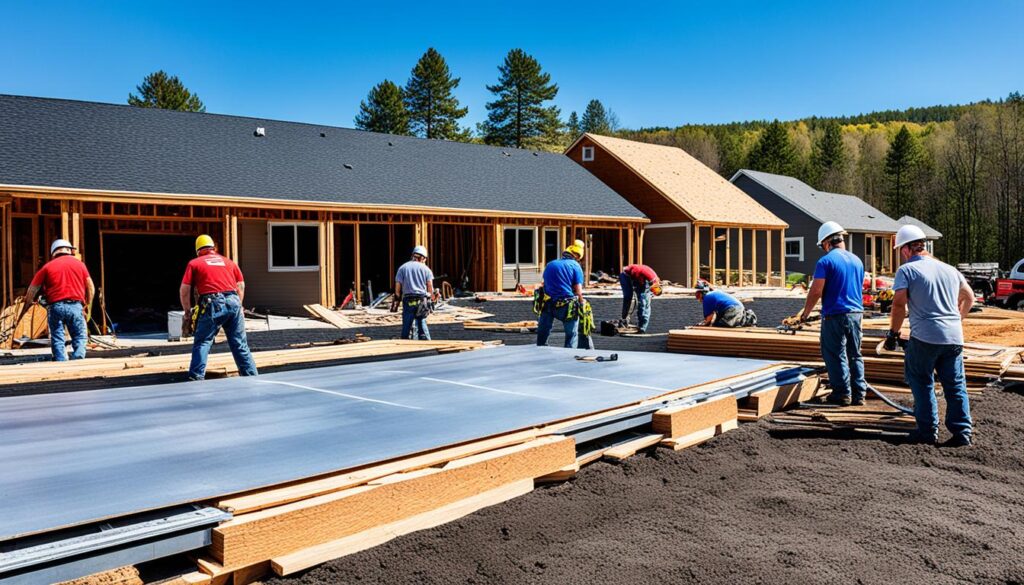

Building a small house is rewarding and efficient. It’s cost-effective and good for the planet. Whether you’re a first-time homeowner or a pro, small house building can seem tough. But with the right strategies and tips, you can make your dream small house come true. This guide will give you everything you need to know for a successful small home project.
Key Takeaways
- Understand the fundamental principles of small house design and construction
- Develop a well-thought-out plan to maximize space and efficiency
- Explore cost-effective and sustainable construction materials
- Streamline the construction process with expert techniques
- Incorporate energy-efficient features for long-term cost savings
- Personalize your small home with thoughtful finishing touches
- Embrace the journey and learn from the experience of building a small house
Understanding the Fundamentals of Small House Building
Building a small house means knowing how to make the most of limited space. It’s all about Home Building, Architecture Design, and Construction Fundamentals. These are key to making a small house project successful. By understanding these, homeowners and builders can make the most of Space Optimization and Tiny Homes.
Using space wisely is key in small house building. It’s important to have good storage, use smart design tricks, and have rooms that serve more than one purpose. Planning well, doing your homework, and getting your hands dirty are vital for success.
Getting to grips with small house building helps homeowners deal with the challenge of limited space. It lets them create a living space that is both beautiful and practical. By tackling the unique problems and using new ideas, people can turn their Tiny Homes into cozy and stylish places.
Small house building is more than just building a house. It’s about making the most of every inch of space and creating a life that values simplicity and smart design. With a strong base in Home Building, Architecture Design, and Construction Fundamentals, homeowners can start a journey to make their small house dreams come true.
Planning Your Small Home
Building a small house needs careful planning to make the most of the space. Start by picking the right site, looking at its size, direction, and how close it is to shops and services. It’s also key to know the local building rules and zoning laws, as they affect your home’s design and building.
After choosing the site and understanding the rules, make a detailed floor plan. Think about how rooms will flow, where important design features will go, and how to use space well. Looking at small homes already built can give you great ideas for your own.
Setting a realistic budget and timeline is vital. Estimate the costs of materials, labor, and permits to keep your project on track and within your budget.
Good planning is key to a successful small house build. By thinking through every part of the project, you can make a home that’s both useful and beautiful. It will meet your needs and fit your way of life.
Sourcing Materials for Your Small House

Building a small house means finding quality materials that won’t break the bank. Look for sustainable and reclaimed options to make your home both beautiful and budget-friendly.
Start by connecting with local construction material suppliers. Check their leftovers for things like tiles, windows, doors, or lumber. These items can be perfect for your small home building project.
Don’t forget about salvage and reclaimed materials. Visit thrift stores, demolition sites, or online to find unique pieces. These can add character to your home and help reduce waste.
- Search for used bricks, wood beams, or architectural pieces to refurbish and use in your sustainable building plan.
- Try cost-effective strategies like buying in bulk or negotiating with suppliers for the best prices on materials.
Be creative and resourceful to find the construction materials you need for your small house. This way, you can achieve your vision without spending too much.
Tackling the Construction Phase
The construction phase of building a small house is thrilling and challenging. It’s where your dream home starts to take shape. This part covers the practical steps needed to build your home.
Tasks like laying the foundation, framing, roofing, and installing plumbing and electrical systems are key. You’ll need to decide if you can do some tasks yourself or if you should hire experts. Each step is important for your home’s success.
Keeping safe during construction is a top priority. Learn about safety rules, use the right tools, and keep your work area tidy. These steps help make your project go smoothly and without accidents.
Whether you’re experienced with DIY or new to building homes, the construction phase is a big step. Knowing about Construction Techniques and Project Management helps you handle it well. This knowledge lets you move forward with confidence in your small house project.
Home Building: Efficient Use of Space
In the world of small house design, making the most of every inch is key. By using smart strategies, homeowners can turn their small homes into beautiful and useful spaces. This is all about space optimization.
Using multifunctional furniture is a big help. Items like ottomans with secret storage or beds with drawers make a big difference. They help use space better. Plus, tiny house layouts that have open areas and smart furniture placement make rooms feel bigger.
Storage solutions are also crucial. Things like vertical shelves, wall units, and smart closets keep small spaces tidy. This makes the space feel bigger and more welcoming.
By following these tips on space optimization, homeowners can make their small homes work better. It’s all about finding the right mix of multifunctional furniture, smart tiny house layouts, and clever storage solutions.
Exterior Considerations for Small Homes

The exterior of a small house is key to making it look good and work well. It’s important to think about how to make the outside look nice and use the space well. This includes making the home look inviting and adding outdoor areas for living.
First impressions matter, so curb appeal is crucial. You can improve this with nice landscaping, well-placed plants, and a welcoming entryway. Adding Accessory Dwelling Units (ADUs) can also be smart. They give you more space or a way to earn extra money without taking up too much room.
Outdoor areas like patios, decks, or gardens can make a small home feel bigger. They help blend indoor and outdoor living. These spots are great for relaxing, having fun, and enjoying nature.
Designing the outside of a small home carefully can make it feel complete and pleasant. It’s all about finding a balance between looks, function, and being eco-friendly. This approach makes a small house design work better for everyone.
Sustainable and Energy-Efficient Techniques
Building a small house means using sustainable and energy-efficient ways. These methods help lower the environmental impact and save money over time.
Passive solar design is a key strategy. It uses the sun to heat and cool the home, cutting down on HVAC use. By placing windows right and using good insulation, small homes can stay comfy with less energy.
Adding renewable energy systems like solar panels or wind turbines makes homes more sustainable. These systems cut down on fossil fuel use and offer a steady, affordable power source. This leads to lower bills and less carbon emissions.
Choosing energy-efficient appliances is also vital. With Energy Star-rated appliances, homes use less energy. This means lower bills and less harm to the environment.
Using green building materials is key too. Materials like bamboo, recycled plastic, and reclaimed wood look good and are better for the planet. They reduce the harm caused by building the home.
By using these sustainable and energy-efficient methods, builders can make homes that look great and are good for the planet and wallet. This approach shows how important sustainable building is in today’s world.
Finishing Touches and Move-In Readiness
As the small house nears completion, it’s time to focus on finishing touches and getting the home ready for its new owners. This stage is key to making your compact home functional, comfortable, and livable.
Interior Design and Furnishings are crucial for a small space. Choosing furniture, lighting, and accessories that save space and look good together can change your home. Go for multi-use items and light colors to keep the space open and welcoming.
Appliances and Smart Home Technology make living easy. Pick energy-saving appliances that fit your needs. Look into smart home features like automated lights, climate control, and security systems for more convenience and efficiency in your small home.
Finally, make sure your small house is ready for move-in. Do a thorough check, set up utilities, and plan the move. Organize your stuff, label boxes, and work with professional movers for a smooth move into your new place.
By paying attention to these final steps, you’ll end up with a cozy, useful, and personalized small home. You’ll be excited to move in.
The Journey: Lessons Learned from Building a Small House
Building a small house is both rewarding and challenging. Throughout this journey, valuable lessons have emerged. These lessons can guide others starting similar projects. Patience and adaptability are key. The process often requires addressing unexpected obstacles and being willing to learn and adjust.
Effective project management and budgeting are crucial for a successful small house build. By planning expenses carefully and keeping an eye on the budget, homeowners can avoid costly surprises. Their vision stays within reach. Getting support from experienced professionals, like contractors and architects, can also provide valuable insights. This helps navigate the complexities of small house construction.
One of the biggest lessons learned is the importance of being ready to overcome challenges. Whether it’s finding hard-to-find materials, dealing with zoning regulations, or facing weather delays, small house builders must be resilient and adaptable. By tackling these obstacles with a solutions-oriented mindset, homeowners can turn potential setbacks into opportunities for growth and innovation.
