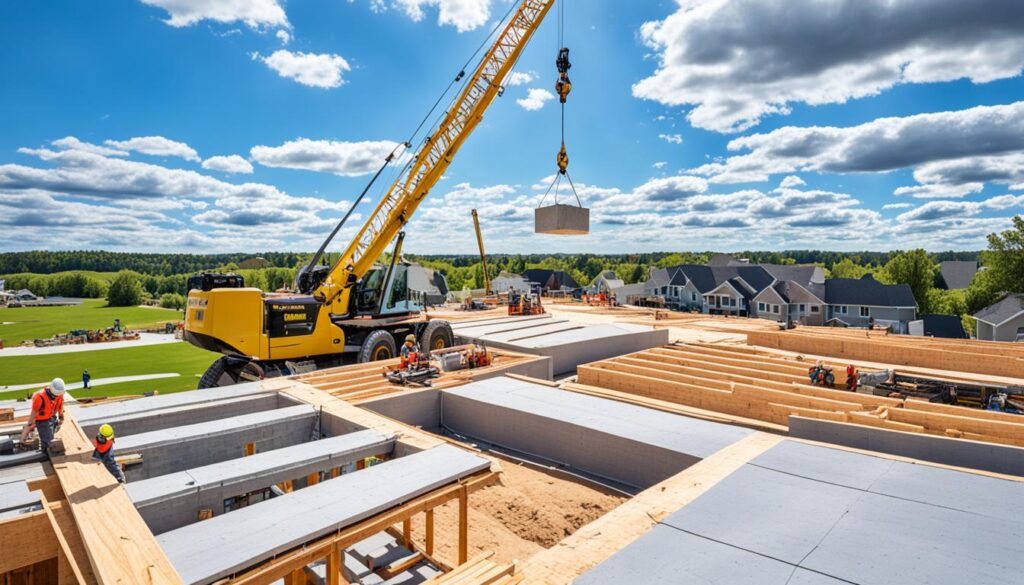

Building a custom home is thrilling but can also feel daunting. This guide will walk you through the key steps to make your dream home a reality. You’ll learn how to set a realistic budget and timeline, get financing, and stay involved in the construction process.
Choosing the right Home Building contractor is crucial. You’ll also need to find the perfect location and lot. It’s important to think about your needs and lifestyle when planning your home. This guide will cover the pros and cons of Home Building, helping you make an informed decision.
It will also guide you in building your dream team of professionals. You’ll learn how to decide between Building or buying a home. Plus, you’ll discover how to pick an Architecture Design and style that fits your vision. The guide aims to simplify the Home Building journey, making it easier for you to achieve your dream home.
Key Takeaways
- Establish a realistic budget and timeline for your Home Building project.
- Choose a reputable and experienced Home Builder to bring your dream home to life.
- Carefully consider the location and lot that best suits your needs and lifestyle.
- Weigh the pros and cons of Home Building versus buying an existing property.
- Assemble a team of professionals, including architects, designers, and contractors, to ensure a successful Home Building process.
Establish a Realistic Budget and Timeline
Building your dream home requires a realistic Home Building Budget and timeline. The median cost to build a new home is about $290,000. However, Construction Costs vary widely, from $100 to $500 per square foot. This depends on location, materials, and custom features.
Remember, the cost includes land, permits, design fees, and more. Experts suggest adding extra money to your budget. Most homeowners spend more than planned when building a custom home.
The average time to build a new home is 8 months. But, this can change due to design complexity, weather, and other issues. Knowing your Budget and timeline helps make the process smoother.
Here’s how to plan your Custom Home Pricing and timeline:
- Look at your finances and set a realistic Home Building Budget that covers all costs.
- Check out Financing Options and get pre-approved for a construction loan or mortgage.
- Talk to builders and architects to understand how long it will take to build your custom home.
- Plan for extra money for unexpected costs and delays to stay within your Budget.
With a solid Home Building Budget and timeline, you can make building your custom home successful and stress-free.
Choose the Right Home Builder
Finding the right Custom Home Builders is key to a successful project. Look for builders in your area with a good reputation. Check their experience, licenses, insurance, and the homes they build. It’s also important to meet them in person to understand how they work with architects and designers, and their budgeting methods.
Some Custom Home Builders work with their own architects. This can make the design and building process smoother. A good Builder will help you through every step, from finding land to final checks.
When checking Home Builder Qualifications, look for:
- Years of experience in custom home construction
- Proper licensing and insurance coverage
- A portfolio of high-quality, similar homes they have built
- Positive reviews and references from past clients
- Clear communication and a collaborative Builder-Architect approach
Choosing the right Custom Home Builder means a smooth and successful project. It covers everything from design to the final finish.
Find the Ideal Location and Lot
Finding the perfect spot for your custom home is key. It involves looking at Custom Home Site Selection, Lot Evaluation, Land Acquisition, and Zoning and Development Considerations. These factors greatly affect your dream home’s final look and feel.
Think about how close you want to be to work, schools, and shops. This affects your daily life, making it easier or harder. Look at the lot’s slope, shape, and any rules that might change your plans and costs.
Talk to your home builder about the lot’s impact on your home’s design and building. They can help with buying the land and solve any problems that come up.
Do your homework on the property’s history, including past sales and any issues. With the right spot and lot, you’re setting up for a custom home you’ll love.
Define Your Needs and Lifestyle
Starting your Custom Home Design means knowing what you need and how you live. Think about your current home and what you like and dislike. Make a list of the key features and designs you must have for your everyday life.
Think about how you and your family use each room in your home. Consider what layout and architectural elements will best suit your lifestyle. Use Pinterest and other sources for inspiration, but be clear about what you really need versus what you just want.
Talking clearly with your builder and designers is key. This way, your custom home will truly reflect your style and improve your life quality.
- Identify your must-have features and design elements
- Understand how you and your family use different spaces
- Gather visual inspiration and separate your “wants” from “needs”
- Communicate effectively with your builder and design team
Home Building: Explore the Pros and Cons
Building your dream home can be very rewarding, but it’s important to know the good and bad sides. Let’s look at the main points to think about when choosing between building a custom home or buying one that’s already made.
Benefits of Building a Custom Home:
- Customization: You can make every part of the design fit your likes and needs.
- Energy Efficiency: New homes can have the latest energy-saving features, saving you money over time.
- Fresh Start: Starting in a brand-new home is exciting, giving you a chance to live in a space made just for you.
Drawbacks of Building a Custom Home:
- Higher Initial Investment: Building a custom home costs more upfront than buying a ready-made one.
- Potential for Budget Overruns: Construction can be complex, and unexpected costs might pop up, making it hard to stick to your budget.
- Extended Timeline: Building a custom home takes longer than buying one, as designing and building it can take a while.
Comparison to Buying an Existing Home:
Buying a home that’s already made is simpler and quicker, with a set price and less worry. But, it might not let you change things much, and you might need to spend a lot on updates later. Thinking about the good and bad of both options will help you pick the best one for your situation and goals.
Decide Between Building or Buying
Choosing between building a custom home or buying one can be tough. Both paths have their pros and cons. The best choice depends on what you need, your budget, and your lifestyle.
Let’s look at the main things to think about when deciding between a Custom Home vs. Existing Home:
- Customization: A custom home lets you design every part of it, from the layout to the finishes. This personal touch is great but comes with a bigger upfront cost.
- Cost Comparison: Building a custom home costs more at first than buying an existing one. But, the benefits of custom design and energy efficiency might make up for it later.
- Timeline Comparison: Building a custom home takes longer, often 6 to 12 months or more. Buying an existing home is usually quicker.
- Location and Lot: With a custom home, you can pick the perfect location and lot. This might not be easy to find in the existing home market, which is a big plus if you have specific needs.
The choice between building a Custom Home or buying an Existing Home depends on your own Factors to Consider. This includes your budget, timeline, and what you want for your home. Talking to experts like builders, architects, and real estate agents can help you make a choice that fits your life and goals.
Assemble Your Dream Team
Building your custom home means putting together a team of skilled pros. At the heart of this team is a Home Builder with lots of experience. They will lead the project and often have Architects and Designers on their team.
When picking a Home Builder, do your homework. Look at their background, past work, and how they work with clients. This partnership is key to making sure your home is just right.
You might also need an Architect for detailed design plans and a Real Estate Pro for buying and selling land. A Landscape Architect can help with outdoor areas too.
Good communication and teamwork are vital for a smooth custom home project. With the right experts, your dream home can become a reality.
Choose an Architectural Style and Design

Building a custom home is a thrilling journey that lets you make every part of your living space your own. Choosing the right architectural style and design is key. You can pick from modern, craftsman, farmhouse, or traditional styles.
When picking Custom Home Architectural Styles, look at different sources for inspiration. Check out online galleries, home design magazines, and neighborhood tours. Think about how the outside and inside of your home should look and work.
Work with your builder and architects or designers to make your dream a reality. They can help you create a Floor Plan Design that’s both efficient and comfortable. Plan where rooms go, how people will move around, and add special features and finishes you love.
Keep an eye on the latest Design Trends and add what fits your style. Whether you like modern minimalism, rustic charm, or classic elegance, your home should show off your taste and needs.
Choosing the right architectural style and design for your custom home makes it not just look great but also work well for your everyday life.
Secure Financing for Your Custom Home
Building your dream home is exciting but needs careful planning. Understanding the financing options for custom homes is key. This guide will help you get the funds you need to make your dream come true.
For custom homes, getting a construction loan is often the best choice. These loans are for short-term and have higher interest rates. They cover the cost of buying land and building your home. Unlike regular mortgages, they’re made for custom home building.
You might also need a land loan to buy the property before you start building. This makes sure you have the land before you begin construction.
After building is done, you’ll switch to a permanent mortgage for long-term financing. It’s important to look for lenders that offer Custom Home Financing, Construction Loans, and Mortgage Options. This will help you find the best financing for your project.
Knowing about the different financing options and what they require will make building your custom home smoother. With the right team and plan, your dream home can become real.
Key Considerations for Securing Financing:
- Understand the difference between construction loans and traditional mortgages
- Research lenders that offer specialized Custom Home Financing options
- Explore the need for a separate Land Loan to purchase the property
- Prepare for the unique requirements and terms of Construction Loans
- Develop a plan to transition from a construction loan to a permanent Mortgage once the home is complete
Stay Involved Throughout the Process
Building your dream home is a big task. It’s important to stay involved from the beginning to the end. Talk often with your builder, check your bills, and keep an eye on your spending. This helps make sure you don’t go over budget.
Be ready to make quick decisions on things like design and materials as they come up. You don’t have to be there every day, but being informed helps make sure your home turns out just right. Remember, no one cares more about your home than you do.
Being involved in the Custom Home Building Process means talking often with your builder. It means keeping an eye on your budget and making smart choices about design. This way, you can build your dream home with confidence and success.

