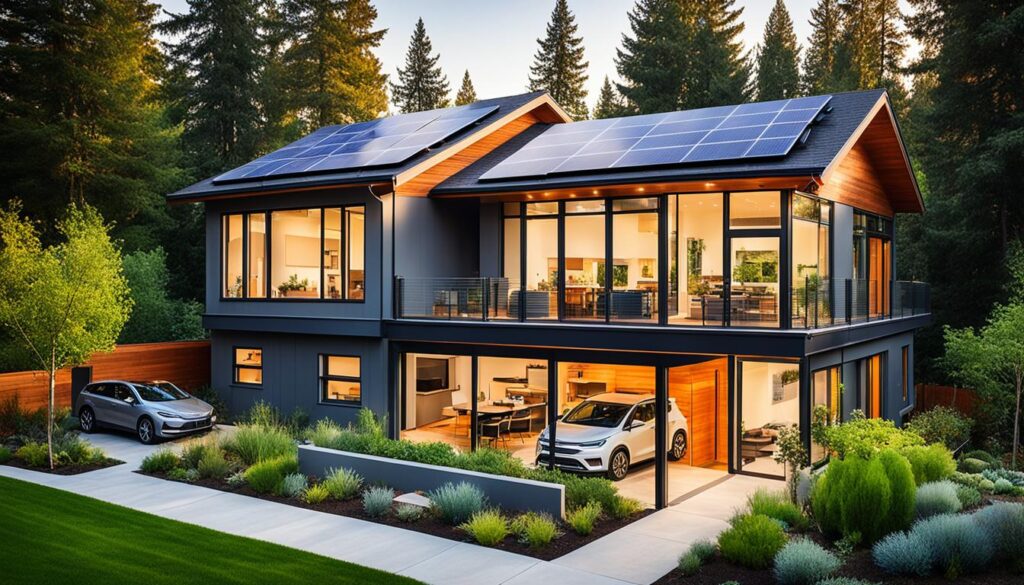

Building an energy-efficient home is a smart move that can cut down on utility bills and help the planet. When planning a new home or updating an old one, focus on saving energy. This means looking at everything from the design and materials used to smart tech and renewable energy.
Homeowners can also look into financing options and incentives to make going green easier. These can help make an energy-efficient home more affordable.
Key Takeaways
- Prioritize energy efficiency in the home design and construction process.
- Explore renewable energy options, such as solar power and solar water heating.
- Utilize energy-efficient materials, advanced framing techniques, and proper insulation and air sealing.
- Invest in high-efficiency HVAC systems and heat recovery ventilators.
- Choose energy-efficient lighting, appliances, and water heating solutions.
Energy-Efficient Home Design Principles
Creating an energy-efficient home means looking at everything that affects its energy use. This includes insulation, air sealing, heating, cooling, and appliances. By improving these systems together, homeowners can cut down on energy use and costs.
Passive Solar Design
Passive solar design is a key part of making homes energy-efficient. It uses the sun’s energy for heating and cooling, cutting down on the need for mechanical systems. By placing windows right, orienting the home, and using materials that hold heat well, homes stay comfortable with less energy.
Advanced Framing Techniques
Advanced framing is also crucial for energy-efficient homes. It uses less lumber, making homes warmer and reducing waste. Builders use smart framing and materials to make homes that use less energy without losing strength.
Maximizing Insulation and Air Sealing
Using the right insulation and air sealing cuts down on energy waste in homes. New construction materials have made insulation better than old fiberglass. Now, spray foam and aerogel are popular for their great energy efficiency and tight seal.
Insulation Materials and Installation
New insulation like spray foam and aerogel have higher R-values. This means they keep your home warmer or cooler with less energy. These modern insulation options are easy to put in and can get into tight spots. This makes sure your home is well-sealed and efficient.
Air Sealing Techniques
Good air sealing is just as important as insulation for keeping your home comfortable. Using caulking and weatherstripping stops air leaks. This means your HVAC works less and you save money.
Energy-Efficient Windows and Doors
Making a home more energy-efficient is key to living sustainably and eco-friendly. Installing energy-efficient windows and doors is a big step in this direction. These changes can cut down on energy use and lower utility bills.
Energy-efficient windows have double-paned glass with low-E coatings. This design helps keep the inside of the home cozy and cuts down on heating and cooling costs. Adding proper sealing and weatherstripping around these windows also stops air leaks, boosting the home’s energy efficiency.
Energy-efficient doors are also crucial for keeping a home’s temperature steady. Doors with top-notch insulation and seals stop air from getting in or out. Switching to these doors and windows makes homes more comfortable and saves money on energy bills. It also helps make the home more energy-efficient overall.
Efficient Heating, Cooling, and Ventilation Systems
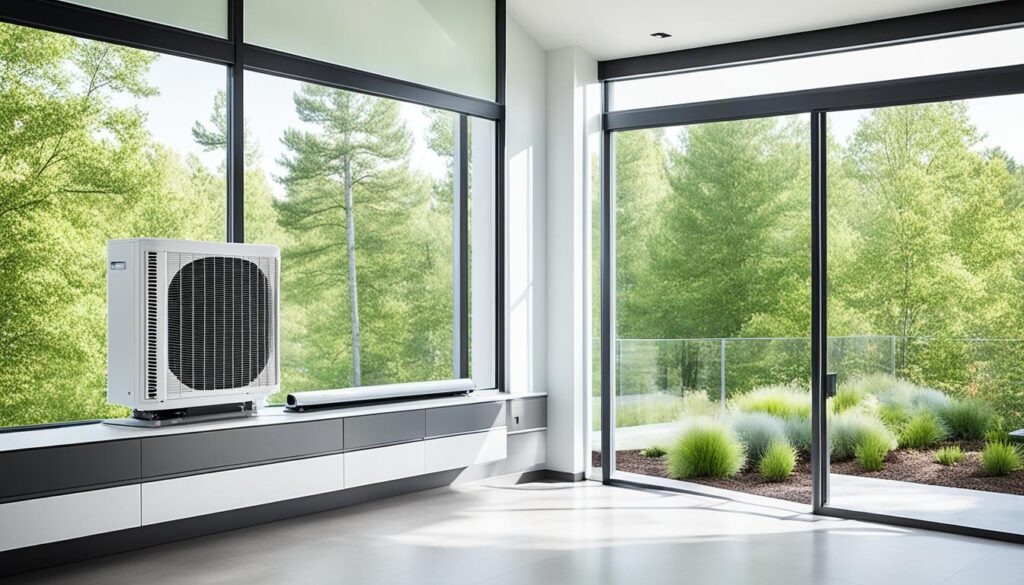
Choosing the right HVAC systems can make your home more energy efficient. Air-source and geothermal heat pumps are great options. They use smart heat transfer to keep your home comfy while cutting down on energy use.
High-Efficiency HVAC Systems
Today’s HVAC systems are designed to be both efficient and comfortable. Air-source heat pumps move heat instead of making it, which is up to 300% more efficient than old furnaces or air conditioners. Geothermal heat pumps go even further, using the earth’s stable temperatures to heat and cool your home efficiently.
Heat Recovery Ventilators (HRVs)
Good indoor air quality is key for a healthy, efficient home. Heat recovery ventilators (HRVs) help with this by controlling ventilation and recovering heat from stale air. They take this heat and add it to fresh air coming in. This makes your HVAC system work better and use less energy.
Water Heating and Conservation
Building an energy-efficient home means focusing on water heating and conservation. Using energy-efficient water heaters like electric heat pumps can cut down on costs. These heaters use heat pump technology to heat water efficiently, saving energy and lowering bills.
Energy-Efficient Water Heaters
Traditional water heaters use a lot of energy to keep water hot. Electric heat pump water heaters are different. They take heat from the air and move it to the water, saving up to 60% energy compared to traditional heaters. This method saves energy and helps make homes more eco-friendly.
Rainwater Collection Systems
Rainwater collection systems are another way to save water and money. They collect and store rainwater for uses like watering plants, washing cars, and flushing toilets. Using rainwater reduces the need for municipal water, saving resources and cutting costs.
By using energy-efficient water heaters and rainwater systems, homeowners can make their homes more eco-friendly. This approach reduces the environmental impact and leads to long-term savings.
Home Building for Energy Efficiency
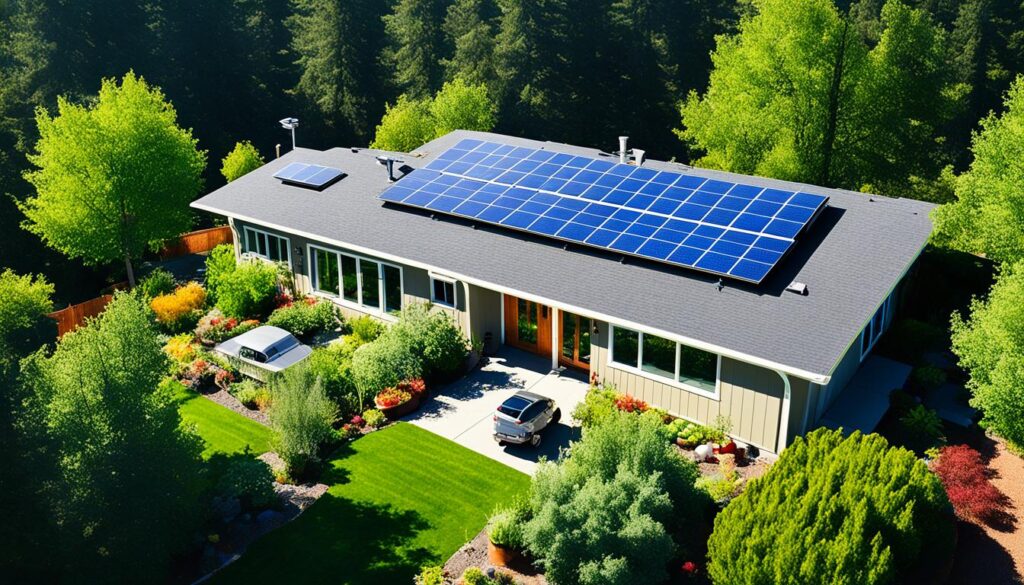
Building an energy-efficient home is key to reducing our environmental impact and cutting utility costs. Homeowners can use cool roofing materials and new building techniques for a sustainable living space.
Cool Roofing Materials
Cool roofing materials like metal, tile, or reflective asphalt shingles are great choices. They reflect sunlight, which lowers heat absorption and reduces the need for air conditioning. This makes homes more energy-efficient and helps fight the urban heat island effect, where cities get hotter than rural areas.
Earth-Sheltered and Straw Bale Construction
Earth-sheltered homes and straw bale construction are also great for saving energy. Earth-sheltered homes use the earth’s insulation to keep temperatures steady all year. Straw bale homes use a renewable, insulating material that cuts down on heating and cooling needs.
Using these innovative methods and materials, homeowners can make their homes more energy-efficient. This approach is good for the planet, saves money, and makes homes more comfortable.
Energy-Efficient Lighting and Appliances
Making your home more energy-efficient is key. Important parts like Energy-Efficient Lighting and ENERGY STAR Certified Appliances help cut down on energy use and bills. With smart home tech and smart choices, you can make your home an Energy Efficiency leader.
LED Lighting and Smart Controls
Old bulbs like incandescent and halogen use a lot of energy. LED Lighting is now the top choice for saving energy. LEDs use much less energy and last a lot longer, cutting down on replacements. Add Smart Home Technology like smart dimmers and motion sensors to make your lights even better.
ENERGY STAR Certified Appliances
Switching to ENERGY STAR Certified Appliances is a great way to make your home more efficient. These appliances, like fridges, washing machines, and dryers, meet strict energy-saving standards. Choosing ENERGY STAR Certified Appliances saves you money on bills and helps the planet too.
Renewable Energy Systems
Adding renewable energy systems to your home changes the game for energy use and green living. Solar PV panels and solar water heating systems are great choices. They help cut down your energy use and use cleaner energy sources.
Solar Photovoltaic (PV) Systems
Solar PV systems turn sunlight into clean electricity for your home. By putting these panels on your roof or in your yard, you can use less grid power and save on bills. Plus, with tax credits and incentives, a solar PV system can also boost your home’s value.
Solar Water Heating Systems
Solar water heating systems work with your solar PV system to heat your water with sunlight. This cuts down on the need for traditional water heaters and boosts your energy efficiency. These systems are dependable, easy to keep up, and can meet a big part of your hot water needs. This saves you money on energy and cuts down on carbon emissions.

